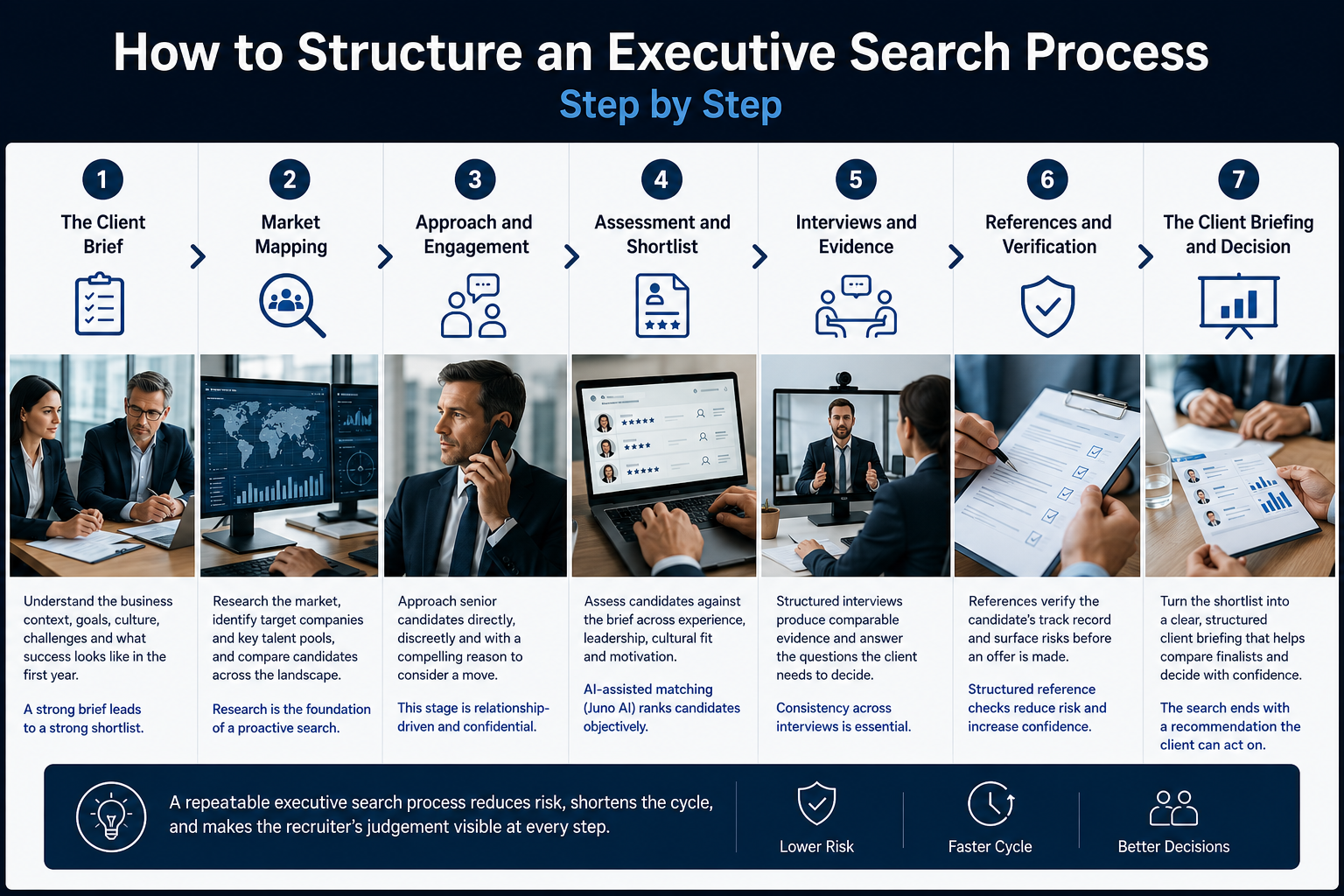
Executive search is not the same as filling an open vacancy. The candidates are often passive, the stakes are higher, and the client expects a rigorous, defensible process. A clear structure makes the difference between a confident placement and a search that loses momentum.
Everything starts with the brief. Beyond the job description, this means understanding the business context, the reason the role is open, the culture, and what success looks like in the first year. A weak brief produces a weak shortlist.
Before approaching anyone, the recruiter maps the market: which companies hold the relevant talent, who sits in the target roles, and how candidates compare. This is the research foundation of executive search, and it separates a proactive search from a reactive one.
Senior candidates are usually not applying. They need to be approached directly, discreetly, and with a compelling reason to consider a move. This stage is relationship-driven and often confidential.
Candidates are assessed against the brief across experience, leadership, cultural fit and motivation. AI-assisted matching, such as Juno AI, can rank candidates objectively before human judgement refines the shortlist.
Structured interviews produce comparable evidence. The goal is not just to like a candidate but to gather the information the client needs to decide. Consistency across interviews matters as much as the questions.
For senior roles, references are not a formality. Structured reference checks verify the candidate's track record and surface risks before an offer is made.
Finally, the recruiter turns the shortlist into a clear, structured client briefing that helps the client compare finalists and decide with confidence. The search ends not with a list of names, but with a recommendation the client can act on.
A repeatable process like this reduces risk, shortens the cycle, and makes the recruiter's judgement visible at every step.