Executive search is a low-volume, high-value business. A single placement matters far more than in high-volume recruitment, which changes which metrics are worth tracking. Chasing volume KPIs borrowed from mass hiring can be misleading.
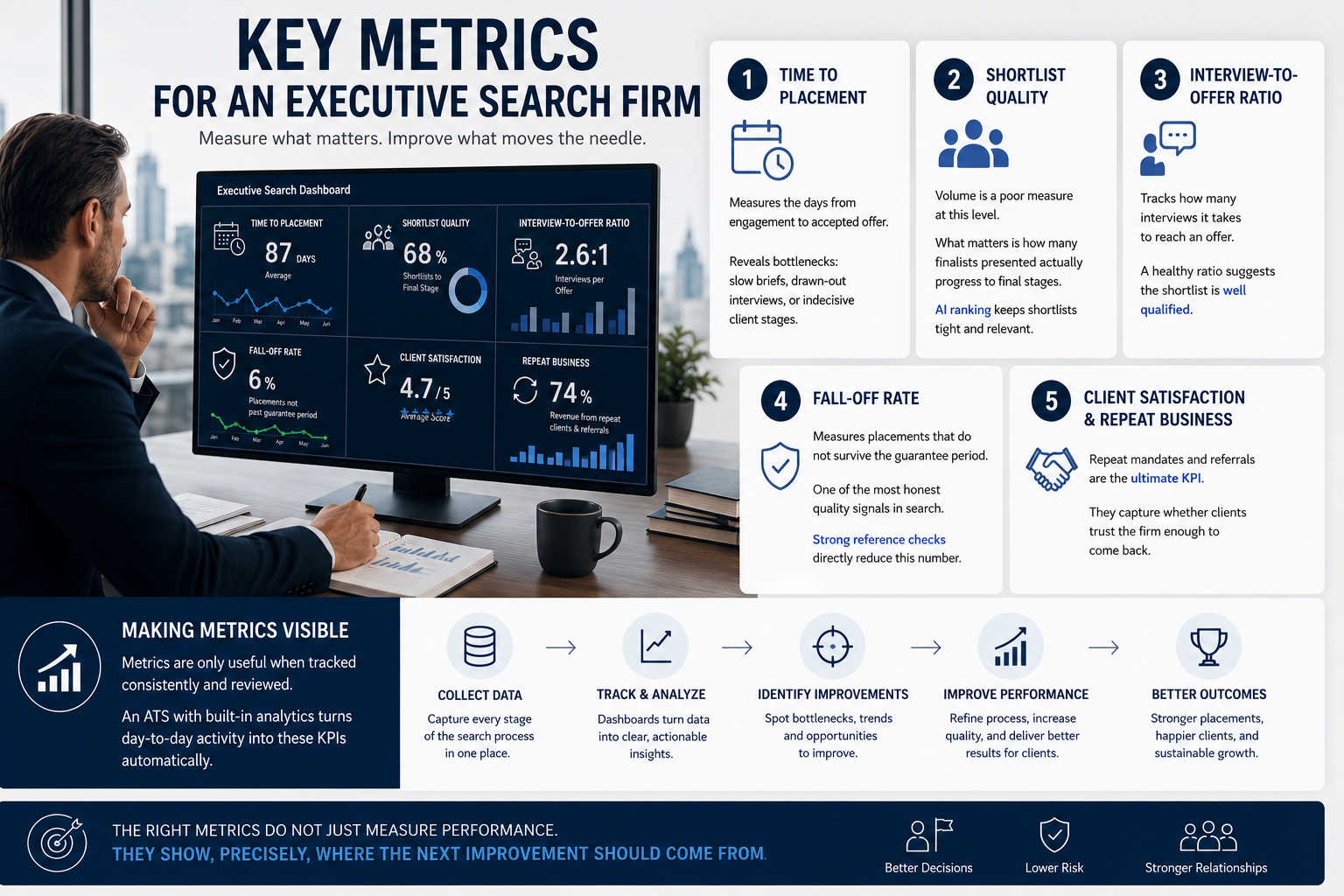
Time to placement measures the days from engagement to accepted offer. In executive search this is naturally longer than in volume hiring, but tracking it reveals bottlenecks: slow briefs, drawn-out interview cycles, or indecisive client stages.
Volume of candidates is a poor measure at this level. What matters is shortlist quality: how many finalists presented actually progress to final stages. AI-assisted ranking through a tool like Juno AI helps keep shortlists tight and relevant rather than long and diluted.
This tracks how many interviews it takes to reach an offer. A healthy ratio suggests the shortlist is well qualified. A poor one suggests the brief or the assessment stage needs work.
Fall-off rate measures placements that do not survive the guarantee period. It is one of the most honest quality signals in search, because it reflects whether the assessment and reference process was rigorous enough. Strong reference checks directly reduce this number.
In a relationship-driven business, repeat mandates and referrals are the ultimate KPI. They capture whether clients trust the firm enough to come back.
Metrics are only useful when tracked consistently and reviewed. An ATS with built-in analytics turns day-to-day activity into these KPIs automatically, so the firm manages by evidence rather than instinct.
The right metrics do not just measure performance. They show, precisely, where the next improvement should come from.