For junior roles, a reference check often confirms little more than employment dates. For executive roles, it is a different exercise entirely. A senior hire carries strategic weight, and a superficial reference process leaves the client exposed.
Confirming titles and dates is the baseline, not the goal. At executive level, references should test the substance of the candidate's track record: what they actually delivered, how they led, and how they handled pressure and failure.
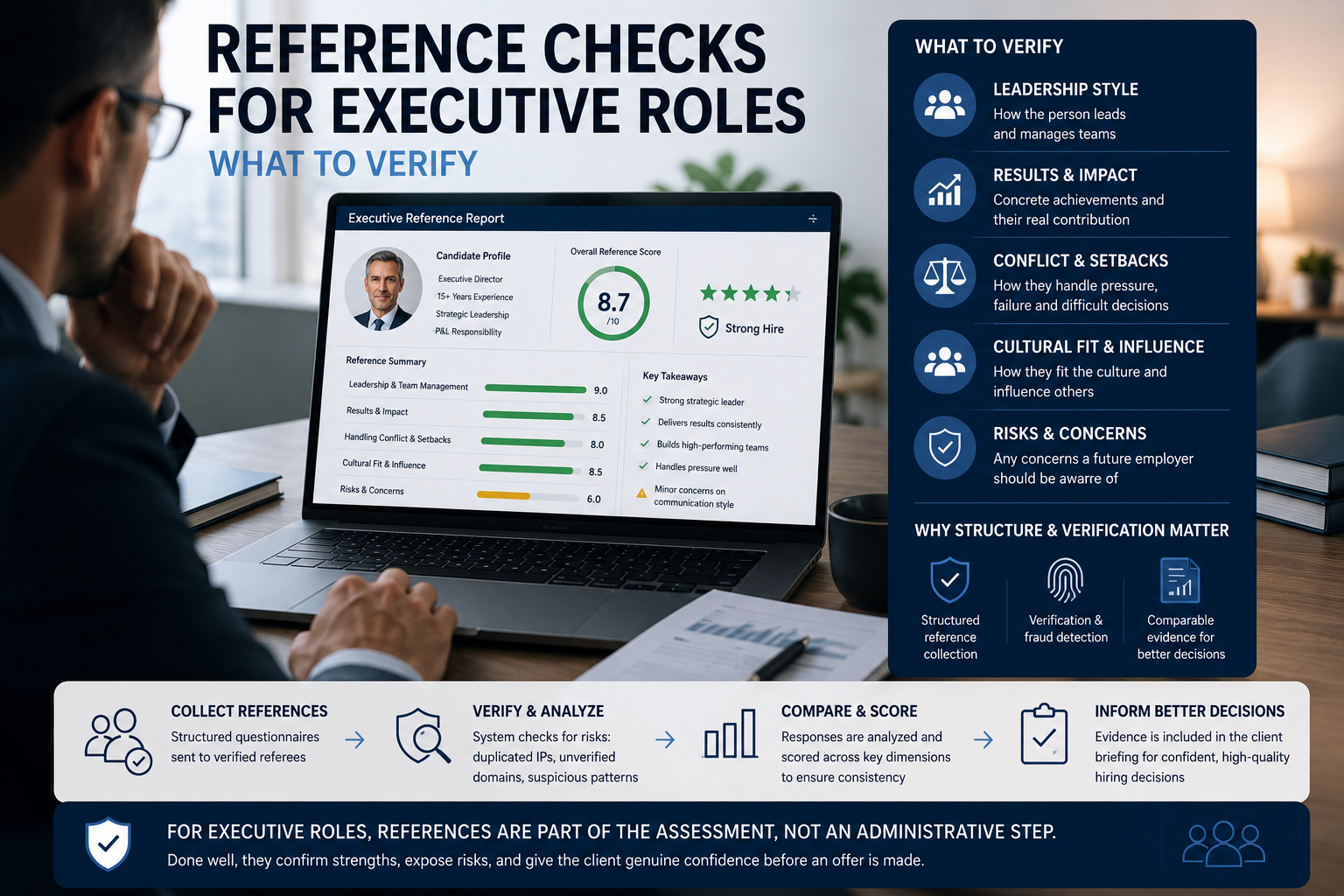
A rigorous executive reference check explores several dimensions:
- leadership style and how the person managed teams
- concrete results and their real contribution to them
- how they handled conflict, setbacks and difficult decisions
- cultural fit and how they influenced the organisation
- any concerns a future employer should be aware of
Informal, unstructured references are easy to game. A candidate can nominate friendly contacts, and a quick phone call rarely surfaces real concerns. This is where structure and verification matter. A system like Referon Detector collects references in a structured way and checks for warning signs such as duplicated IP addresses, unverified email domains and unusual similarities in how referees respond.
When references are gathered consistently, they become comparable across finalists. That consistency lets the recruiter fold reference evidence into a structured client briefing rather than a set of anecdotal phone notes.
For executive roles, references are part of the assessment, not an administrative box to tick after the decision. Done well, they confirm strengths, expose risks, and give the client genuine confidence before an offer is made. The higher the role, the more the reference process should look like due diligence.